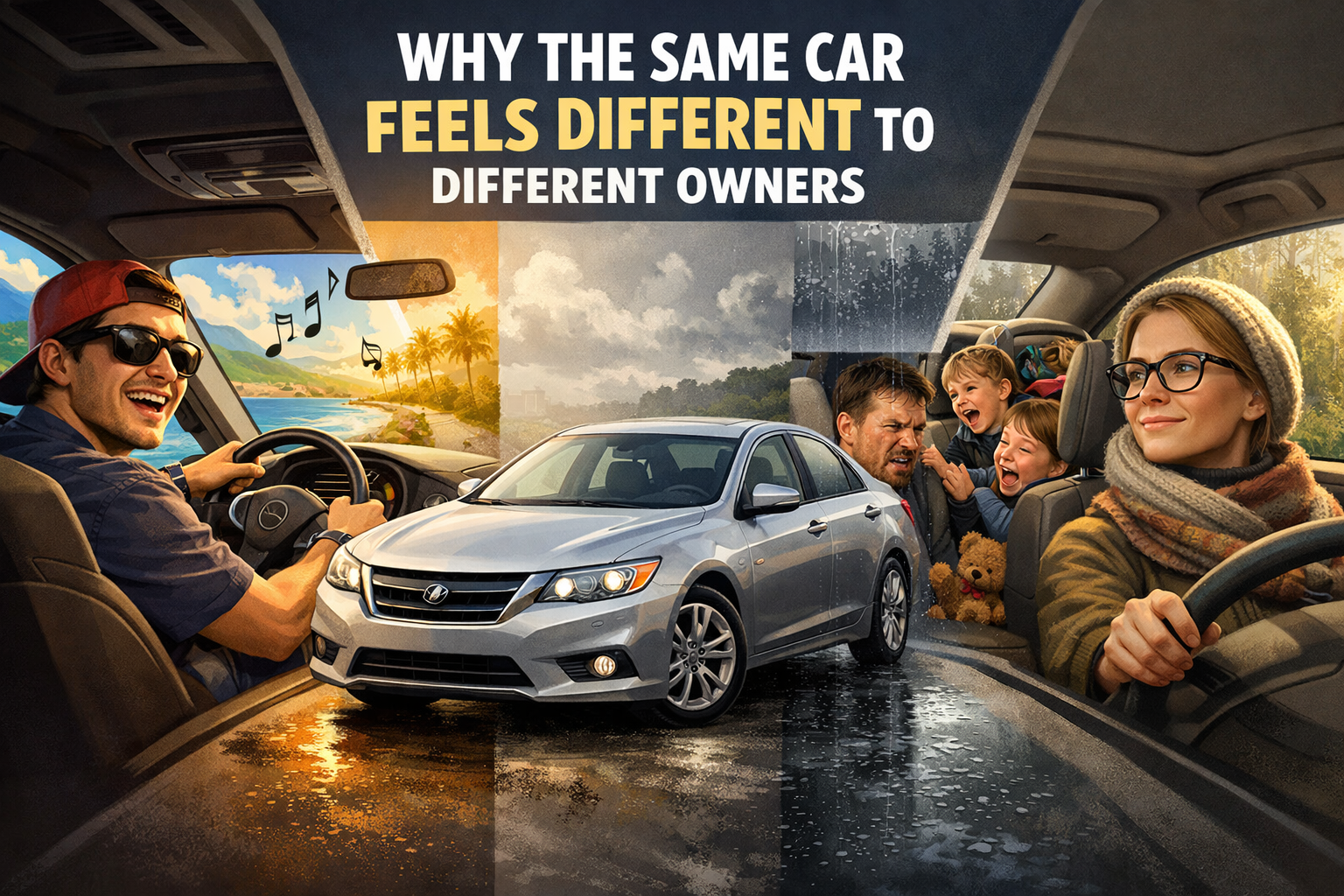
Spend a few minutes talking to different drivers about the same model, and the answers rarely match. Some describe it as smooth and reliable, others say it feels stiff or unpredictable. That contrast sits right at the core of why the same car feels different to different owners, even when nothing about the car itself has changed.
It Starts With the Way People Drive
You don’t notice it at first, but driving style shapes the car more than people expect.
Two drivers can take the same vehicle and, within months, create completely different experiences. One accelerates gently, anticipates stops, keeps movements smooth. Another pushes harder, brakes later, reacts instead of planning ahead.
The car responds. Always.
And over time, those responses build patterns. Steering feels tighter or looser depending on use. The suspension settles into a certain behavior. Even how the engine feels can shift slightly based on how it’s been treated.
It’s not just wear. It’s adaptation.
So when someone says a car feels “perfect” or “off,” they’re often describing a version of the car shaped by their own habits — not a neutral baseline.
Expectations Quietly Redefine the Experience
What you expect from a car changes how you interpret everything it does.
If someone comes from a softer, more relaxed vehicle, the same car might feel sharp or even uncomfortable. Another driver, used to something more rigid, might describe it as balanced and precise.
Neither is wrong.
There’s a subtle filter at work. People don’t experience the car directly — they experience the difference between what they expect and what they get.
That difference can show up in small ways:
- steering that feels “too light” or “perfectly easy”
- suspension that feels “firm” or “confident”
- engine response that feels “slow” or “smooth”
Same mechanics. Different perception.
And that’s a big part of understanding why the same car feels different to different owners — the reference point is never the same.
The Way a Car Is Lived In
Cars aren’t static objects. They’re lived in.
Some owners keep everything minimal, clean, almost untouched. Others adapt the space — adjusting seats constantly, using every compartment, making it part of their routine.
Those differences don’t just affect how the car looks. They affect how it feels to be inside it.
A car can feel calm and organized, or slightly chaotic. Quiet or constantly busy. Familiar or somehow never fully settled.
It’s subtle, but real.
And over time, these small environmental differences shape the overall impression more than any technical feature.
Time Changes the Relationship
There’s also something that only shows up after months, not days.
At first, a car is something you observe. Later, it becomes something you interact with automatically. Eventually, it turns into something you barely think about at all.
But that transition doesn’t happen the same way for everyone.
Some drivers settle into the car quickly. It starts to feel natural, almost invisible in their daily routine. Others never fully adjust. They keep noticing small things — not major issues, just enough to prevent that sense of ease.
You can’t always explain why.
It’s not about specs. It’s not even about condition. It’s about how well the car aligns with the person using it.
Closing Thought
When people compare opinions about the same vehicle, it can feel confusing — as if someone must be wrong. But most of the time, they’re just describing different experiences shaped by habits, expectations, and time.
That’s ultimately what defines why the same car feels different to different owners — not the car itself, but the quiet interaction between the machine and the person behind the wheel.