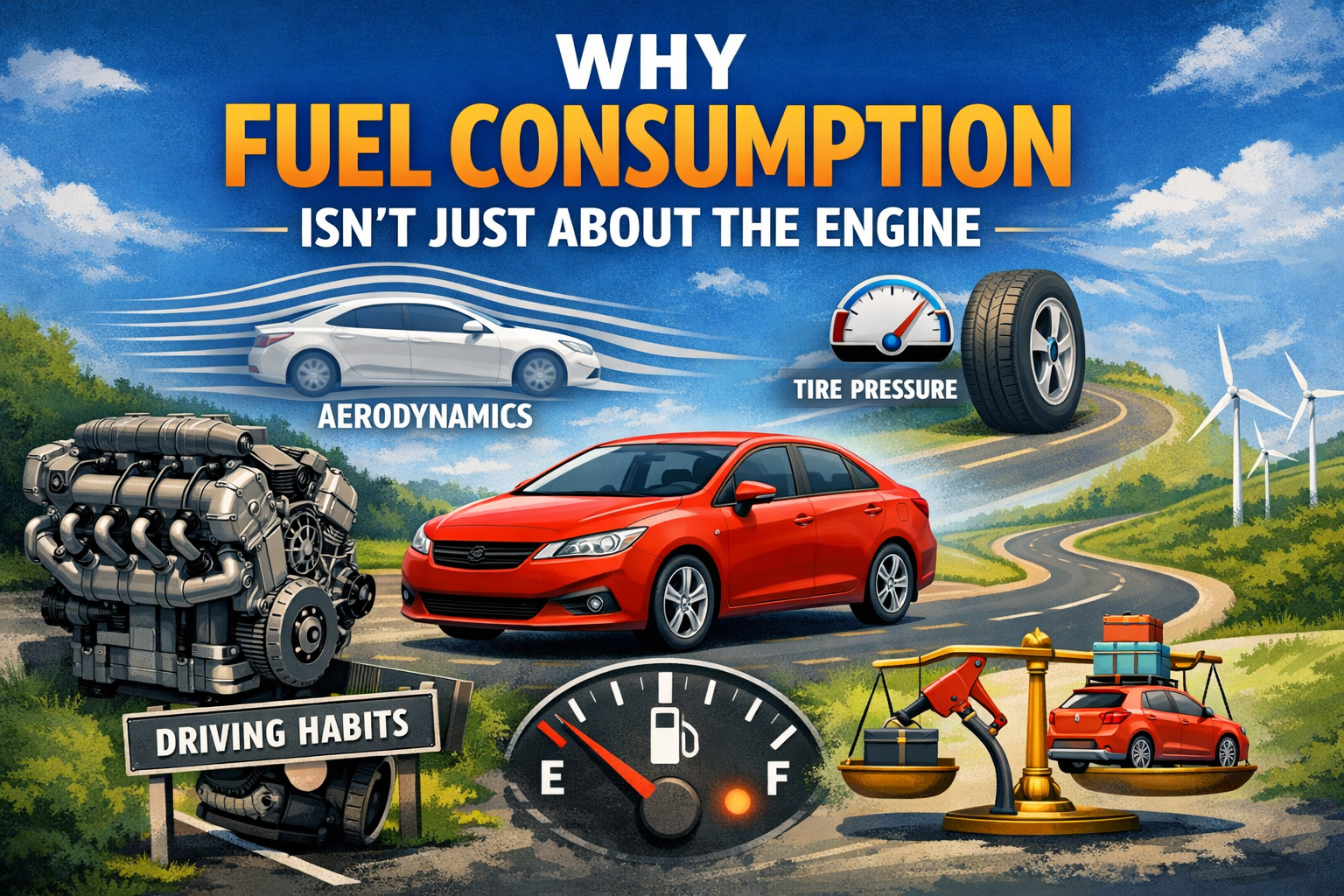
People often reduce it to numbers — engine size, horsepower, maybe fuel type. But after a few months behind the wheel, it becomes obvious that why fuel consumption isn’t just about the engine has more to do with everything around it than the engine itself.
The Same Car, Different Numbers
You can take two identical cars, drive them in the same city, and still end up with noticeably different fuel consumption. Not slightly — sometimes enough to feel like something is wrong.
Usually, nothing is.
The difference often comes from how the car is driven, but not in the obvious “fast vs slow” sense. It’s more subtle than that.
Small variations start to matter:
- how often you accelerate instead of maintaining speed
- whether you anticipate stops or brake late
- how smoothly you transition between movements
These aren’t extreme behaviors. They’re habits. And they quietly shape how the engine works over time.
Traffic Changes Everything
There’s a big contrast people don’t always account for — not between cars, but between situations.
A car that feels efficient on open roads can behave completely differently in stop-and-go traffic. Short distances, constant interruptions, uneven pacing — all of that forces the engine to work in a less stable rhythm.
And that instability costs fuel.
It’s not just traffic itself. It’s how you move through it.
Some drivers adapt quickly, keeping things smooth even in difficult conditions. Others react more sharply — accelerating, braking, adjusting constantly. The car responds accordingly.
That’s where the idea of efficiency starts to shift away from the engine alone.
Weight, Resistance, and Things You Don’t Think About
Not everything that affects fuel consumption is visible while driving.
Some factors are so ordinary they don’t feel worth mentioning — until you compare results over time.
A car carrying extra weight behaves differently. Even small additions can change how often the engine needs to work harder. The same goes for resistance — not just from the road, but from things like tire condition or pressure.
It’s easy to overlook, but these details add up.
You might not notice them on a single drive. But across weeks or months, they start to show:
- slightly higher consumption without a clear reason
- a feeling that the car needs more effort to move
- less consistency in how it responds
Again, nothing dramatic. Just gradual change.
The Engine Follows the Pattern You Set
Engines don’t operate in isolation. They adapt to how they’re used.
If the driving pattern is smooth and consistent, the engine settles into that rhythm. If it’s irregular — frequent short trips, constant variation — the engine never fully stabilizes.
That affects efficiency more than people expect.
And this is where why fuel consumption isn’t just about the engine becomes clearer. The engine doesn’t define the outcome by itself. It reacts to everything around it — driving style, conditions, timing.
Closing Thought
Fuel consumption looks like a technical detail, something you can calculate and compare. In practice, it’s more fluid than that.
The numbers don’t just reflect the engine. They reflect behavior, environment, and small decisions repeated over time.
That’s why why fuel consumption isn’t just about the engine is less about mechanics and more about how the car is actually used — in real conditions, not ideal ones.