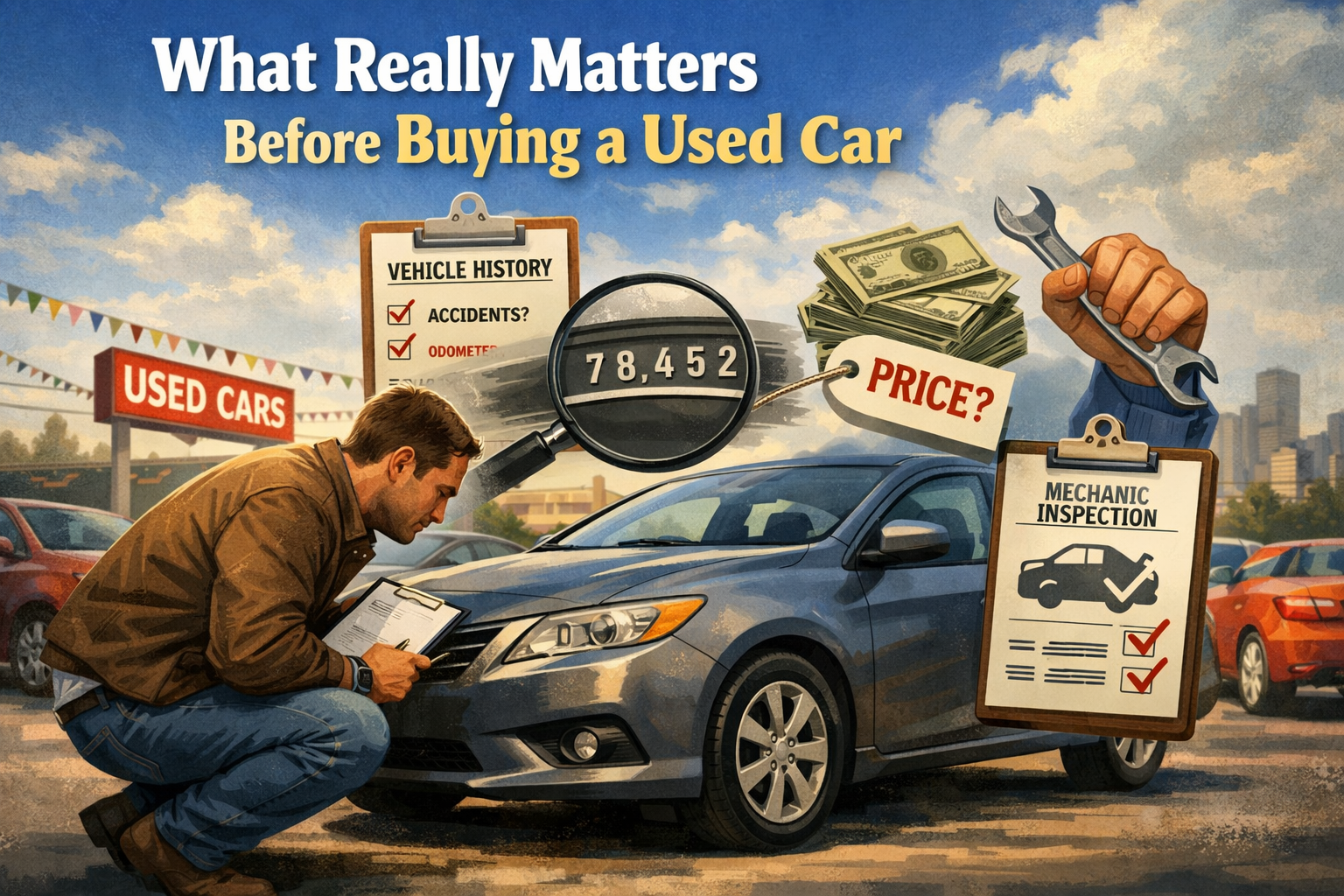
Buying a car second-hand rarely feels simple, even when everything looks clear. At some point, the question shifts from price or mileage to something harder to define — and that’s where what really matters before buying a used car starts to become less obvious than people expect.
First Impressions Can Be Misleading
You see a car, walk around it, maybe sit inside. Everything looks fine. Sometimes even better than expected.
That moment is powerful. It creates a sense of confidence — or doubt — almost instantly.
But the strange thing is, that first impression often has very little to do with how the car will actually feel later. Clean paint, a tidy interior, even a smooth test drive — all of that can be real, and still not tell the full story.
There’s a difference between a car that presents well and a car that holds up over time.
And that difference isn’t always visible right away.
The Story Behind the Car Matters More Than the Specs
Mileage, year, engine size — those are easy to compare. They give structure to the decision.
What’s harder to evaluate is how the car has been used.
Two vehicles with similar numbers can feel completely different once you spend time with them. One feels consistent, predictable. The other… slightly uneven, even if nothing is obviously wrong.
That usually comes down to patterns, not events.
You start to piece it together through small clues:
- how evenly everything responds during driving
- whether wear matches the age naturally or feels inconsistent
- how smoothly different systems work together, not separately
It’s less about checking items and more about sensing continuity.
What You Don’t Notice at First
Some of the most important things don’t show up during a short inspection.
They appear later, in situations that aren’t easy to simulate. Slow traffic. Cold starts. Long drives when you’re tired and less focused.
That’s where certain details begin to matter:
- how predictable the brakes feel after repeated use
- whether the steering stays consistent or changes slightly
- how the car behaves when you’re not actively paying attention
These are not dramatic issues. They’re subtle, but they shape your experience every day.
And this is where what really matters before buying a used car becomes less about finding faults and more about understanding how the car behaves over time.
The Feeling You Can’t Fully Explain
There’s always a moment when a car either feels right… or it doesn’t.
Not because of something specific. More like an overall impression that’s hard to break into parts.
You might notice it in small things:
- the way the car settles after a turn
- how naturally your position behind the wheel feels
- whether you relax while driving or stay slightly tense
This isn’t about perfection. It’s about alignment.
And interestingly, that feeling doesn’t always match what you see on paper. A technically “better” option might feel less comfortable than something simpler but more balanced.
Closing Thought
In the end, choosing a used car isn’t about eliminating every possible risk. It’s about understanding what kind of experience you’re stepping into.
That’s why what really matters before buying a used car often comes down to things you can’t fully measure — the consistency, the history behind the surface, and the quiet sense that the car will still feel right after the first impression fades.