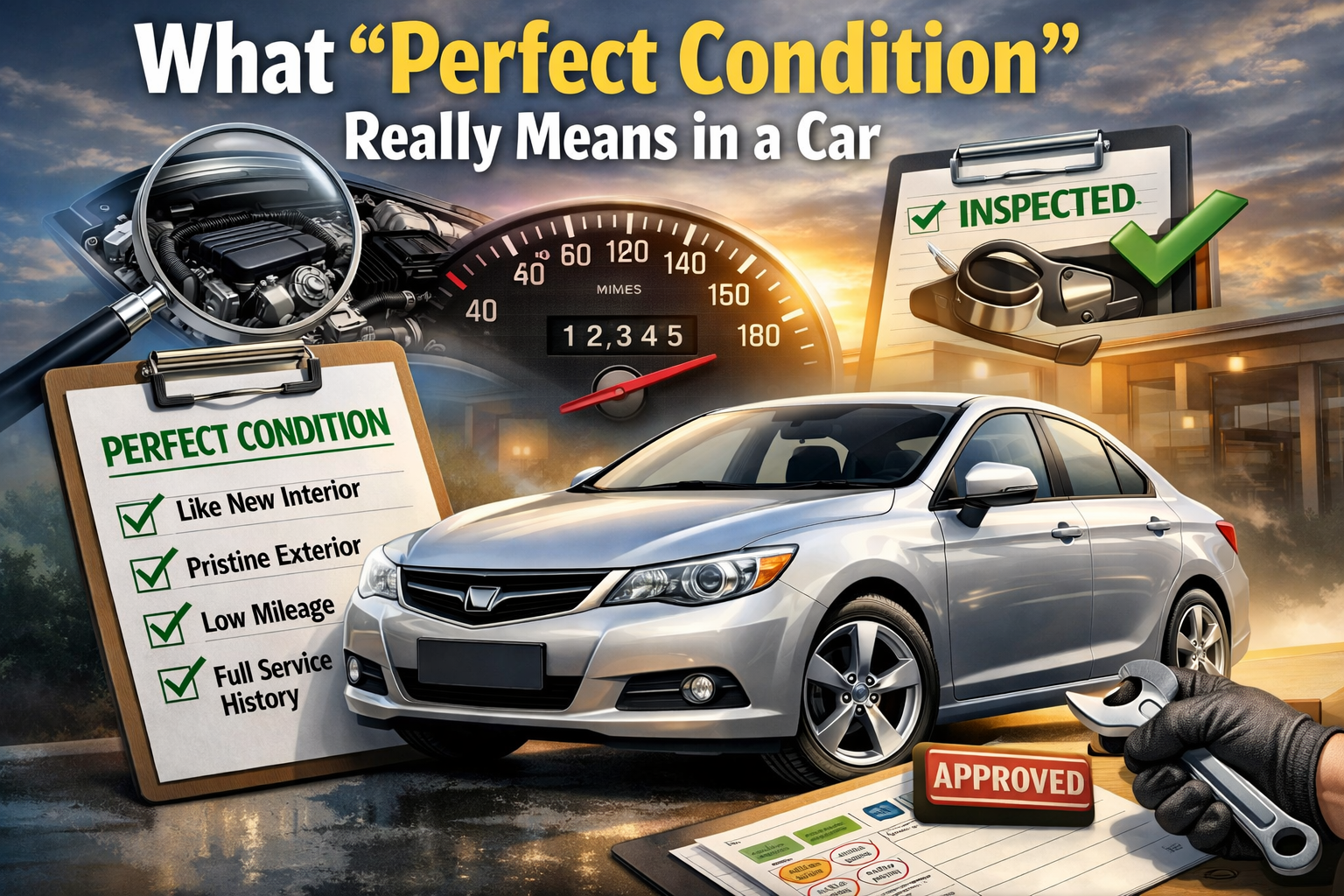
People often use the phrase without thinking much about it, but what “perfect condition” really means in a car isn’t as straightforward as it sounds. The idea feels clear until you start looking closer — and then it slowly becomes something much less absolute.
Clean Doesn’t Always Mean Well Kept
At first glance, a car can look flawless. Polished paint, spotless interior, everything aligned just right. It creates a strong first impression, and it’s easy to trust that impression.
But visual condition is only one layer, and not even the most important one.
Some cars are maintained carefully but don’t look perfect anymore — small marks, minor wear, signs of actual use. Others are prepared to look fresh, even if the underlying condition tells a different story.
You start to notice a pattern after a while:
- interiors that look untouched but feel oddly worn in key spots
- engines that run smoothly but haven’t been consistently cared for
- details that seem “too clean,” almost staged rather than natural
So the question shifts. Not “does it look perfect?” but “does it feel honest?”
The Difference Between Wear and Neglect
There’s a line that isn’t always obvious, especially at first.
Wear is normal. It shows that the car has been used, lived in, adapted to someone’s routine. You’ll see it in small places — the steering wheel, the pedals, the seat edges. It doesn’t mean something is wrong.
Neglect feels different. It’s less about visible marks and more about what’s been ignored over time.
You don’t always see neglect immediately. You sense it:
- things that should have been fixed, but weren’t
- inconsistencies in how the car responds
- small issues that seem unrelated but keep appearing
That distinction is subtle, but it matters more than appearance. And it’s a big part of understanding what “perfect condition” really means in a car beyond the surface.
When a Car Feels “Right” Without Looking Perfect
Sometimes the most reliable cars don’t impress visually at all.
They start easily. They respond predictably. Nothing feels forced or strained. You don’t question how they’ll behave — you just drive.
That kind of condition doesn’t stand out in photos or quick inspections. It reveals itself over time, through consistency rather than presentation.
And interestingly, this is where perception shifts.
A car that looked average at first begins to feel solid. Trust builds gradually. Meanwhile, something that seemed flawless can start to feel slightly off once you spend more time with it.
It’s not about defects. It’s about alignment — between how the car appears and how it actually behaves.
Perfection Isn’t Static
There’s also something else people rarely consider.
Condition changes, even when a car is well maintained. It’s not a fixed state you can capture in a single moment. It moves with time, usage, and care.
A car described as “perfect” today might not feel that way after a few months, depending on how it’s driven and maintained. And the opposite can also happen — something that wasn’t perfect at first can become more dependable as it’s properly cared for.
So perfection isn’t really a status. It’s more like a direction.
Closing Thought
In the end, the idea of perfection in a car turns out to be less about appearance and more about consistency, honesty, and how everything works together over time.
That’s why what “perfect condition” really means in a car isn’t something you can fully judge in a moment. It’s something you understand gradually — once the surface stops mattering and the real behavior begins to show.