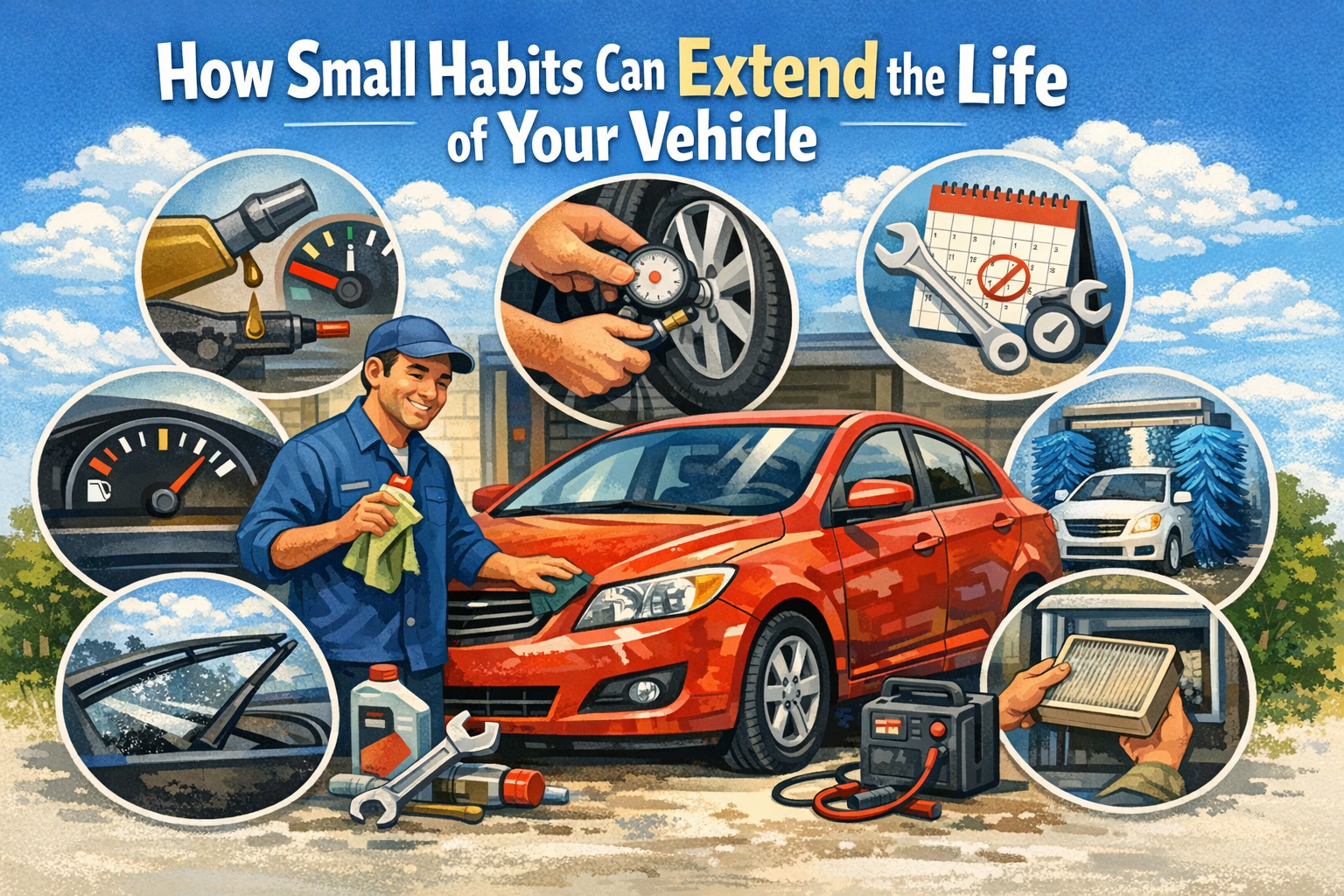
Most people think a car lasts longer because of major repairs or occasional servicing. In reality, how small habits can extend the life of your vehicle becomes obvious only after time passes — when two similar cars age very differently without any dramatic reason.
The Way You Treat the Car Before It Even Moves
There’s a moment most drivers don’t think about — right after starting the engine.
Some people rush immediately. Others pause for a few seconds, letting everything settle. It doesn’t feel important. It barely feels like a decision at all.
But over time, those seconds add up.
The same goes for how you begin a drive. Sudden acceleration when the car is still cold, or smooth, gradual movement — both become patterns. The car adapts, and so do its components.
You don’t see the effect right away. You feel it later, when one car starts sounding tired much earlier than expected.
Small Stress vs Constant Pressure
A single aggressive drive won’t damage a car. That’s not how it works.
What changes things is repetition. Daily habits that seem insignificant create a kind of background pressure. Not enough to break anything, but enough to wear things down faster.
It usually comes down to simple behavior:
- braking late instead of anticipating stops
- turning the wheel while the car isn’t fully moving
- ignoring small vibrations or sounds that weren’t there before
None of these feel serious. That’s exactly why they matter.
And this is where how small habits can extend the life of your vehicle becomes less about maintenance and more about awareness.
Paying Attention Without Overthinking
There’s a balance that experienced drivers often develop without talking about it.
They don’t analyze every sound or movement, but they notice when something feels different. Not dramatically wrong — just slightly off.
That awareness doesn’t lead to panic. It leads to small adjustments.
Sometimes it’s as simple as changing how you accelerate. Sometimes it’s choosing to slow down earlier. Occasionally, it’s deciding not to ignore a new noise.
The habit isn’t about reacting. It’s about not missing the moment when something changes.
Care That Doesn’t Feel Like Effort
Some of the most effective habits don’t feel like maintenance at all.
They become part of the routine, almost invisible:
- keeping fuel levels from dropping too low too often
- avoiding unnecessary short drives when the engine never fully warms up
- letting the car settle after longer drives instead of shutting it off immediately
Individually, they seem minor. Together, they shape how the car ages.
And interestingly, these habits don’t require extra time — just a slightly different approach to things you already do.
It Shows Up Later, Not Now
The real effect of these habits doesn’t appear in the first months. Everything feels fine, regardless of how the car is treated.
The difference becomes clear later.
One vehicle feels consistent, predictable, almost unchanged in how it responds. Another starts to feel slightly rough, less precise, even if nothing is technically broken.
That’s the part people often don’t connect back to their own behavior.
Closing Thought
In the end, longevity isn’t built through occasional effort. It’s shaped quietly, through repetition.
And that’s what defines how small habits can extend the life of your vehicle — not big decisions, but the accumulation of small ones that never seemed important at the time.